Call us now :08071630254
 Send Inquiry
![11-[5-(Dimethylamino)-1-naphthalenesulfonylamino]undecanoic acid Share](https://tiimg.tistatic.com/new_website1/design2025/product-details/marketeq_share-alt-5.svg)
 Send Inquiry
11-[5-(Dimethylamino)-1-naphthalenesulfonylamino]undecanoic acid
Price 100 INR/ Kilograms
MOQ : 1 Kilograms
11-[5-(Dimethylamino)-1-naphthalenesulfonylamino]undecanoic acid Specification
- Molecular Formula
- C23H34N2O4S
- Molecular Weight
- 434.59 Grams (g)
- Chemical Name
- 11-[5-(Dimethylamino)-1-naphthalenesulfonylamino]undecanoic acid
- CAS No
- 73025-02-2
- Purity(%)
- 98%
11-[5-(Dimethylamino)-1-naphthalenesulfonylamino]undecanoic acid Trade Information
- Minimum Order Quantity
- 1 Kilograms
- Payment Terms
- Cash in Advance (CID), Cash Advance (CA)
- Supply Ability
- 500 Kilograms Per Month
- Delivery Time
- 3-4 Week
- Sample Available
- Yes
- Sample Policy
- Sample costs shipping and taxes has to be paid by the buyer
- Main Export Market(s)
- South America, Eastern Europe, Western Europe, Middle East, Africa, Central America, Asia, North America, Australia
- Main Domestic Market
- All India
About 11-[5-(Dimethylamino)-1-naphthalenesulfonylamino]undecanoic acid
11-[5-(Dimethylamino)-1-naphthalenesulfonylamino]undecanoic acid Synonym: 11-(Dansylamino)undecanoic acid, DAUDA Empirical Formula (Hill Notation): C23H34N2O4SMolecular Weight: 434.59CAS Number: 73025-02-2 Properties product line BioReagent assay 98.0% (TLC) solubility DMSO: soluble methanol: soluble fluorescence ex335nm; em516nm in methanol suitability suitable for fluorescence storage temp. 2-8 Degree C Description Other Notes HPLC determination of fatty acid binding proteins in rat liver with fluorescence detection Packaging 100 mg in glass bottle Bottomless glass bottle. Contents are inside inserted fused cone. Application 11-[5-(Dimethylamino)-1-naphthalenesulfonylamino]undecanoic acid (DAUDA), a dansyl-type fluorophore, is widely used as a hydrophobic binding site probe to identify and characterize the binding sites of medium chain fatty acids, their derivatives and other hydrophobic compounds on molecules such as proteins.FAQs of 11-[5-(Dimethylamino)-1-naphthalenesulfonylamino]undecanoic acid:
Q: What is the molecular formula of 11-[5-(Dimethylamino)-1-naphthalenesulfonylamino]undecanoic acid?
A: The molecular formula is C23H34N2O4S.Q: What is the CAS number for this product?
A: The CAS number is 73025-02-2.Q: What is the molecular weight of 11-[5-(Dimethylamino)-1-naphthalenesulfonylamino]undecanoic acid?
A: The molecular weight is 434.59 grams (g).Q: What is the purity percentage of this chemical compound?
A: The purity of the product is 98%.Q: What type of product specifications are available for this chemical?
A: The product specifications include the chemical name, molecular formula, CAS number, molecular weight, and purity percentage.![11-[5-(Dimethylamino)-1-naphthalenesulfonylamino]undecanoic acid](https://cpimg.tistatic.com/03397633/b/4/11-5-Dimethylamino-1-naphthalenesulfonylamino-undecanoic-acid.png)
Tell us about your requirement

Price:
Quantity
Select Unit
- 50
- 100
- 200
- 250
- 500
- 1000+
Additional detail
Mobile number
Email

More Products in Biochemical & Reagents Category
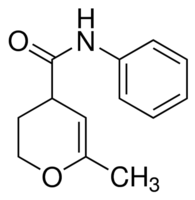
Pyracarbolid (C13H15NO2)
Price 100 INR
Minimum Order Quantity : 1 Kilograms
Molecular Formula : C13H15NO2
Molecular Weight : 217.26 Grams (g)
Chemical Name : Other, Pyracarbolid
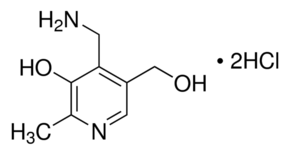
Pyridoxamine dihydrochloride
Price 100 INR
Minimum Order Quantity : 1 , , Kilograms
Molecular Formula : C8H14Cl2N2O2
Molecular Weight : 241.11 Grams (g)
Usage : Pyridoxamine dihydrochloride is a hydrochloride obtained by combining pyridoxamine with two molar equivalents of hydrochloric acid. Used for treatment of diabetic nephropathy.

(+)-Norfenfluramine hydrochloride
Price 100 INR
Minimum Order Quantity : 1 Kilograms
Molecular Formula : C10H13ClF3N
Molecular Weight : 239.67. Grams (g)
Chemical Name : Other, Norfenfluramine hydrochloride

1,2-Dioctanoylethylene glycol
Price 100 INR
Minimum Order Quantity : 1 , , Kilograms
Molecular Weight : 314.5 Grams (g)
Chemical Name : Other, Dioctanoylethylene glycol
Usage : It is used as a minor (1–2%) ingredient in shoe polish and also in some inks and dyes. Ethylene glycol has seen some use as a rot and fungal treatment for wood, both as a preventative and a treatment after the fact. It has been used in a few cases to treat partially rotted wooden objects to be displayed in museums.

 Send Inquiry
Our Products


Kesarkunj, Rm No. 9, Vasanji Lalji Road, Kandivali (W), Mumbai - 400067, Maharashtra, India

Mr Nilesh Shah
(Director)
Mobile :08071630254
 Send Inquiry
 Send SMS
Developed and Managed by Infocom Network Private Limited.
